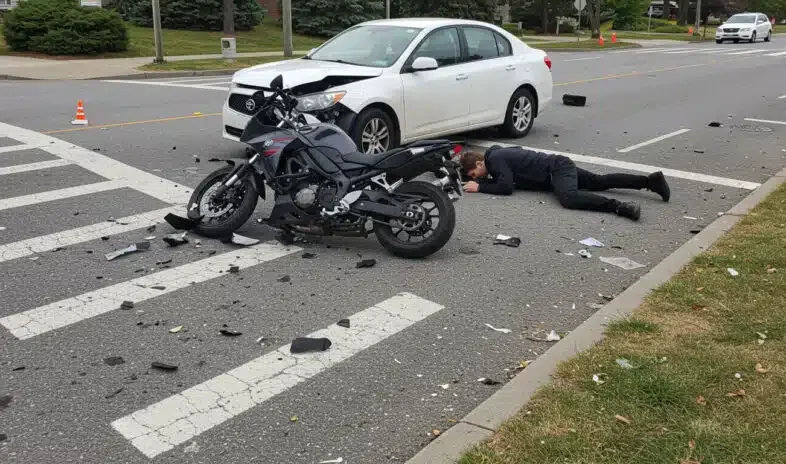
Motorcycle accidents can happen suddenly and often involve fast-moving events that are difficult to understand after the crash fully. Motorcycles are smaller and more visible than other vehicles; it may be necessary to carefully examine a variety of evidence in order to pinpoint the precise cause of a crash. One of the most valuable sources of information in these investigations is witness testimony. Statements from those who saw the accident can provide details that help us comprehend what happened and make sense of the sequence of events. In complex crash cases, a motorcycle accident attorney in Denver may compare witness testimony with physical evidence to support a detailed investigation.
Providing An Independent Account Of The Accident
In order to help investigators comprehend how the incident transpired, witnesses can offer an unbiased description of the incident. In contrast to the drivers involved, witnesses are not directly connected to the incident and may offer an objective description of the events they observed.
For example, a witness might describe the speed of vehicles, the position of the motorcycle on the road, or whether a driver appeared to be distracted. These details can help investigators reconstruct the accident and identify the actions that led to the collision.
Clarifying The Sequence Of Events
Motorcycle accidents often involve multiple actions occurring within seconds. A driver may change lanes, another vehicle may brake suddenly, and the motorcycle may attempt to avoid a collision. Understanding the exact order of these actions can be difficult without additional observations.
Witness testimony helps investigators piece together the sequence of events leading up to the accident. Multiple witness statements can reveal how traffic was moving, how vehicles interacted with each other, and what occurred immediately before the impact. This information is essential when determining how responsibility should be assigned.
Supporting Or Challenging Driver Statements
After a motorcycle accident, drivers involved in the collision may provide their own explanations of what occurred. However, these accounts may differ depending on each person’s perspective. Witness testimony can help verify whether these statements accurately reflect what happened.
If a driver claims that the motorcyclist was speeding, for example, a witness may confirm or dispute that claim. Similarly, witnesses may report if a vehicle made a sudden turn or failed to signal. These observations can help investigators determine whether the statements given by the drivers align with what was actually observed.
Observations Of Road And Traffic Conditions
Witnesses often notice environmental details that may influence an accident. For instance, they may recall whether traffic was heavy, whether road construction was present, or whether weather conditions affected visibility.
These observations can help investigators evaluate whether external factors contributed to the accident. For instance, a witness may state that a driver disregarded traffic in front of them or failed to slow down in severe weather. Such details can provide valuable context when examining the circumstances surrounding the collision.
Helping Identify Additional Evidence
Witnesses can also assist investigators by pointing out evidence that might otherwise be overlooked. Someone who observed the accident may remember the location of debris, the direction vehicles traveled after the impact, or the presence of nearby cameras.
In some cases, witnesses may even have photographs or video recordings taken shortly after the accident occurred. These materials can add further clarity to the investigation and help confirm the accuracy of other evidence collected at the scene.
Strengthening The Investigation Process
When investigators collect statements from several witnesses, they can compare the accounts to identify consistent details. Patterns that appear across multiple statements often help confirm the reliability of certain observations.
For example, if several witnesses report that a vehicle changed lanes abruptly before the crash, that information may become a key factor in determining what caused the accident. This type of corroboration can strengthen the overall investigation and support a more accurate conclusion.
Encouraging Fair Evaluation Of Motorcycle Accidents
Motorcycle accidents sometimes involve misunderstandings about rider behavior. Because motorcycles are less common than other vehicles, assumptions may arise about how the accident occurred. Witness testimony can help prevent these misunderstandings by providing factual observations.
When witnesses describe what they actually saw rather than relying on assumptions, their statements contribute to a fair evaluation of the accident. This helps ensure that investigators base their conclusions on accurate information rather than speculation.
Conclusion
Witness testimony plays a vital role in motorcycle accident investigations by offering independent observations that help clarify how collisions occur. From explaining the sequence of events to confirming driver behavior and identifying important evidence, witnesses contribute valuable insights that support a thorough investigation. By gathering and analyzing these statements carefully, investigators can gain a clearer understanding of motorcycle accidents and ensure that the circumstances surrounding each case are evaluated fairly and accurately.

Our Fact Checking Process
We prioritize accuracy and integrity in all our content. Here’s how we maintain high editorial standards:
Expert Review: All articles are reviewed by subject matter experts.
Source Validation: Information is supported by credible and up-to-date sources.
Transparency: We clearly cite references and disclose any potential conflicts.
Our Review Board
Our content is carefully reviewed by experienced professionals to ensure accuracy and relevance.
Qualified Experts: Each article is evaluated by specialists with field-specific knowledge.
Up-to-date Insights: We incorporate the latest research, trends, and industry standards.
Commitment to Quality: Reviewers ensure clarity, accuracy, and completeness.
Look for the Expert-Reviewed label to read content you can trust.